Spinning Cylinder
A 3D shape with two identical parallel circular bases connected by a curved surface.
Cylinder Facts
Notice these interesting things:
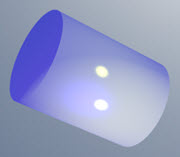
- It has a flat base and a flat top
- The base is the same as the top
- From base to top the shape stays the same
- It has one curved side
- It is not a polyhedron as it has a curved surface
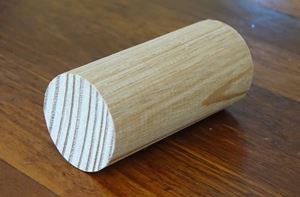
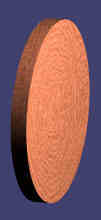
A wooden cylinder
An object shaped like a cylinder is said to be cylindrical.
Oblique Cylinder
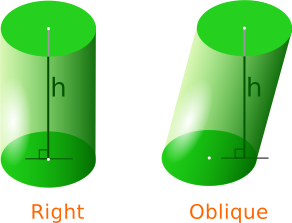
When the two ends are directly aligned on each other it is a Right Cylinder otherwise it is an Oblique Cylinder:
Surface Area of a Cylinder
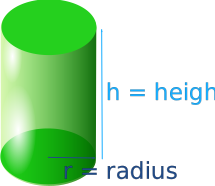
The Surface Area has these parts:
- One end = π × r2
- Other end = π × r2
- Side = 2 × π × r × h
Which together make:
Example: h = 7 and r = 2
Try it yourself: cut some paper so it fits around a cylinder, then unwrap and measure.
It will be h high and 2πr (the circumference of a circle) long:
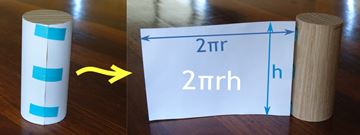
Side area = 2πrh
Don't forget the two end bits:
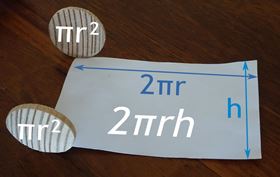
Total Surface Area
= 2(πr2) + 2πrh
= 2πr(r+h)
Volume of a Cylinder
The volume of a cylinder is the base area times the height at right angles to the base.
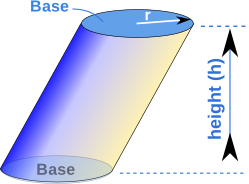
Volume = Base Area × Height
For a circular base, the area is π × r2
So we get:
Volume = π × r2 × h
Example: radius r = 2 and height h = 7
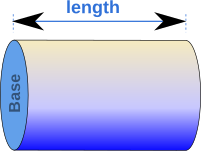
For a right cylinder, the height and the length are the same.
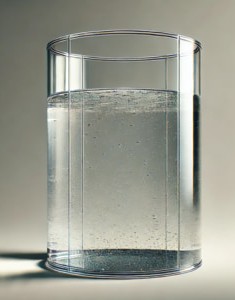
Example: Volume of a Water Tank
A cylindrical water tank has a radius of 0.9 meters and water depth is 1.7 meters, how much water is there?
In other words about 4.326 cubic meters, or about 4,326 liters
How to remember: Volume = pizza

Imagine you just cooked a pizza.
- the radius is "z"
- the thickness "a" is the same everywhere
What's the volume?
Volume = pi × z × z × a
(we would normally write "pi" as π, and z × z as z2, but you get the idea!)
Play with it here. The formula also works when it "leans over" (oblique) but remember that the height is always at right angles to the base:
And this is why:
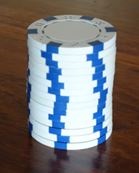
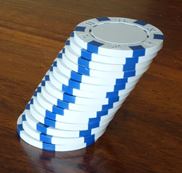
The stack leans over, but still has the same volume
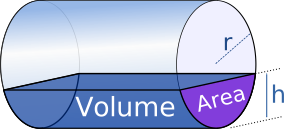
Volume of a Tank
Learn how to find the volume of a partly filled horizontal cylinder like this one:
Volume of a Cone vs Cylinder
The volume formulas for cylinders and cones are very similar:
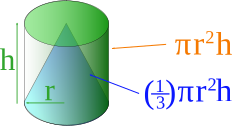
| Volume of a cylinder: | π × r2 × h |
| Volume of a cone: | 13 π × r2 × h |
So a cone's volume is exactly one third ( 13 ) of a cylinder's volume.
In future, order your ice creams in cylinders, not cones, you get 3 times as much!
Like a Prism
A cylinder is like a prism with an infinite number of sides, see Prism vs Cylinder.
It Doesn't Have to Be Circular
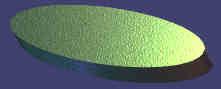
When we say Cylinder we mean a Circular Cylinder, but you can also have Elliptical Cylinders, like this one:
And we can have stranger cylinders!
So long as the cross-section is curved and is the same from one end to the other, then it is some type of cylinder, but the area and volume calculations may be different than shown above.
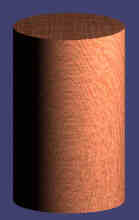
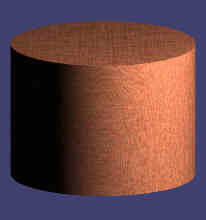
More Cylinders
   |
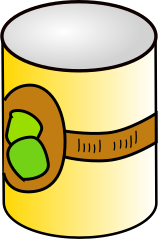
"We eat what we can
And what we can't we can"