Discrete and Continuous Data
Data can be descriptive (like "high" or "fast") or numerical (numbers).
And numerical data can be discrete or continuous:
Discrete data can be counted,
Continuous data can be measured
Discrete Data
Discrete Data can only take certain values.

Example: the number of students in a class
We can't have half a student!

Example: the result of rolling 2 dice
We add up the dots on the two dice.
The total can only be 2, 3, 4, 5, 6, 7, 8, 9, 10, 11 or 12
Discrete data is always countable, but can be a category, like shoe size.

Example: Shoe Size
Common sizes might be 5, 5.5, 6, 6.5, 7, 7.5 and so on. But we don't have every possible size (like 5.23 or 6.08)
And we can count the sizes, so shoe size is discrete.
Continuous Data
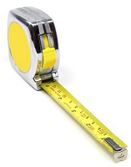
Continuous Data can take any value (within a range)
Examples:
- A person's height: could be any value (within the range of human heights), not just certain fixed heights,
- Time in a race: you could even measure it to fractions of a second,
- A dog's weight,
- The length of a leaf,
- Lots more!
Compare Discrete and Continuous
Think about these:
- Number of books on a shelf , we can count them: 1, 2, 3, ... This is discrete
- Thickness of a book , it could be 1.2 cm, 1.23 cm, 1.235 cm, and so on. This is continuous