Variables with Exponents
How to Multiply and Divide them
What's a Variable with an Exponent?
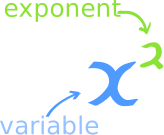
A Variable is a symbol for a number we don't know yet. It is usually a letter like x or y.
An exponent (such as the 2 in x2) says how many times to use the variable in a multiplication.
Think of an exponent as an instruction: "Hey! Multiply yourself this many times!"
Example: y2 = yy
(yy means y multiplied by y, because in Algebra putting two letters next to each other means to multiply them)
Also z3 = zzz, x5 = xxxxx and so on
Exponents of 1 and 0
Exponent of 1
When the exponent is 1, we just have the variable itself (example x1 = x)
We usually don't write the "1", but it sometimes helps to remember that x is also x1
Exponent of 0
When the exponent is 0, we aren't multiplying by anything and the answer is just "1"
(example y0 = 1)
It follows this nice pattern:
- y3 = yyy
- y2 = yy
- y1 = y
- y0 = 1
Multiplying Variables with Exponents
So, how do we multiply this:
(y2)(y3)
We know that y2 = yy, and y3 = yyy so let's write out all the multiplies:
y2 y3 = yy yyy
That's 5 "y"s multiplied together, so the new exponent must be 5:
y2 y3 = y5
But why count the "y"s when the exponents already tell us how many?
The exponents tell us there are two "y"s multiplied by 3 "y"s for a total of 5 "y"s:
y2 y3 = y2+3 = y5
So, the simplest method is to just add the exponents!
(Note: this is one of the Laws of Exponents)
Mixed Variables
When we have a mix of variables, add the exponents of each variable separately, like this (press play):
With Constants
There will often be constants (numbers like 3, 2.9, ½ and so on) mixed in as well.
Never fear! Just multiply the constants separately and put the result in the answer:
(Note: "·" means multiply, which we use when the "×" might be confused with the letter "x")
Here's a more complicated example with constants and exponents:
Negative Exponents
Negative Exponents Mean Dividing!
| x-1 = 1x | x-2 = 1x2 | x-3 = 1x3 | and so on... |
Get familiar with this idea, it is very important and useful!
Dividing
Now remove any matching "y"s that are
both top and bottom (because yy = 1)
So 3 "y"s above the line get reduced by 2 "y"s below the line, leaving only 1 "y" :
y3y2 = yyyyy = y3−2 = y1 = y
OR, we could have done it like this:
y3y2 = y3y-2 = y3−2 = y1 = y
So ... just subtract the exponents of the variables we are dividing by!
Here's a bigger demonstration, involving several variables:
The "z"s got completely cancelled out! (Which makes sense, because z2/z2 = 1)
To see what's going on, write down all the multiplies, then "cross out" the variables that are both top and bottom:
x3 y z2x y2 z2 = xxx y zzx yy zz = xxx y zzx yy zz = xxy = x2y
But once again, why count the variables, when the exponents tell you how many?
Once you get confident you can do the whole thing quite quickly "in place" like this: